

Episode 1 0000 0000 — October 22nd, 2026 — Available at read.fluxcollective.org/p/256
Contributors to this issue: Justin Quimby, Neel Mehta, Erika Rice Scherpelz, MK, Boris Smus
Additional insights from: Ade Oshineye, Ben Mathes, Dart Lindsley, Jasen Robillard, Jon Lebensold, Laura Eberly, Lisie Lillianfeld, Robinson Eaton, Spencer Pitman, Stefano Mazzocchi, Wesley Beary, and the rest of the FLUX Collective
We’re a ragtag band of systems thinkers who have been dedicating our early mornings to finding new lenses to help you make sense of the complex world we live in. This newsletter is a collection of patterns we’ve noticed in recent weeks.
“There will come a time when you believe everything is finished; that will be the beginning.”
— Louis L’Amour
🥛🫗 When full empties out
While much maligned (for good reason), Frederick Taylor’s scientific management boosted economic output, leading to higher profits and shorter work days; there was economic displacement, but also social progress. Henry Ford in the 1910s and 1920s argued that the 40-hour workweek would give workers more leisure time, thus driving mass consumption. W.K. Kellogg moved his Battle Creek plant to 6-hour shifts in 1930, based on the belief that it would give workers time for family, community, and self-improvement. It seemed like the history of labor was moving in a direction. Yet, in today’s modern world, the dream of the 4-hour (let alone 4-day) workweek seems dead.
But not completely. AI leaders have talked about how LLMs and other AI technologies will help create free time for everyone. In Aug 2025, Jensen Huang of Nvidia said, “Tech innovation will ‘probably’ lead to a four-day week.” Bill Gates wondered whether we should work two or three days a week on the Tonight Show. Elon Musk said, “AI and robotics will make work optional” in November 2025.
Yet at the same time, AI exhaustion is overwhelming many of us. We spend so much time tending to our agents that we feel like we are working more than ever. We feel like we are getting more done than ever (...with mixed results when we look at what we really kept from all those sessions). Why, when we have an amazing productivity tool, do we continually lean back into work? Perhaps when we generate more output per hour, the tradeoff between leisure and working for a marginal hour seems to tilt more towards working. Or, when everyone’s more productive, it becomes a red queen’s race just to stay in place.
Yet, sometimes fullness can become the basis for a new emptiness. As episode 256 reminds us, after a byte is full, it returns to 0.
It can seem like an inevitability that AI will push us to work more as we chase the elusive joy of closure of getting more things done. Yet, in a world where our glass is half-full, the quotes from above are hyperbole pointing at a real future. There is a future where AI systems and agents help people focus less on keeping their heads above water and keeping up with the Joneses. Instead, they could grant us time for gaming, socializing, reading, and civic engagement, to fill up one’s life with meaning and purpose.
Neither picture is an inevitability. These are choices we will make as we choose how to turn our value into social norms and workplace policies. So let’s dream for a moment: if you had two hours free every day and did not feel the need to earn more money, what would you do with it?
🛣️🚩 Signposts
Clues that point to where our changing world might lead us.
🚏🧮 Multiple pollsters published fake polls about the upcoming US election
Polling aggregator sites like The New York Times, the Cook Political Report, and Nate Silver’s blog aim to combine various polls of upcoming US elections, present the current state of each race, and thereby predict outcomes. Aggregators typically accept most legitimate-looking polls, but the election forecasting site FiftyPlusOne published exposés showing that two hot new pollsters were publishing completely fake polls with fabricated data, thereby skewing the averages (which are heavily cited on social media and the mainstream media). One fake pollster deleted all their web presence as soon as FiftyPlusOne asked for comment, while the other went on a tirade and argued that their polls were intentionally faked, part of a social experiment to ‘prove’ that polling aggregators were too lenient in what data they accepted. In reality, it’s unclear why these pollsters would intentionally publish fake results, but they may have wanted to promote certain candidates — or just make money by altering the odds on prediction markets.
🚏⛑️ Ukraine claimed the “world’s first evacuation” by drone
A Ukrainian military brigade published a video showing a large drone flying to an injured soldier on the front lines; after the soldier strapped himself in, the drone flew him to a safe area and deposited him back on the ground. The ‘hexacopter’ drone, which was about twice the soldier’s size, was originally designed as a bomber but retrofitted to carry a large payload without swaying or flipping over. The Ukrainians claimed this mission was “the world’s first evacuation of an injured soldier from the front lines by drone,” and they say they’re also working on using drones to move medical cargo like hospital equipment, medicines, donated organs, and blood samples between hospitals in areas with poor road connectivity.

🚏🐘 Government websites worldwide went down after a huge PHP hack
The programming language PHP is used by almost 70% of websites, including Wikipedia and sites using popular content management systems like Wordpress and Drupal. Just a few days ago, researchers (aided by LLMs) discovered a catastrophic security hole in all versions of PHP dating back to 2012; it would allow hackers to run arbitrary code on a PHP server. Governments around the world, from Scotland to Denmark to Australia, had to temporarily pull down their sites while applying emergency patches. Also affected were universities and hospitals, Wikipedia, 4chan, OpenStreetMap, and (oddly) multiple Nintendo services like multiplayer Pokémon servers and the Switch Online service.
🚏⛽ Gas cars now represent under 50% of global new car sales
In the first half of 2026, gasoline-only cars represented 49% of all new cars sold, down from 52% a year prior and 73% in 2021. This therefore marks the first time in history that gas cars were a minority of new car sales. Hybrid cars made up 18% of sales, battery-electric 17%, and the others (including diesel and plug-in hybrid cars) the remaining 16%. (The unfortunate corollary is that 83% of cars — i.e. everyone besides battery-electric vehicles — still have a combustion engine.) Battery EVs posted a strong 12% year-over-year growth in sales, but the pattern was highly uneven across geographies: 32% growth in Europe, a staggering 81% rise in Southeast Asia, a 3% decline in China, and a whopping 15% drop in North America.
📖⏳ Worth your time
Some especially insightful pieces we’ve read, watched, and listened to recently.
Attention Is All You Have (Alice Girard Guittard) — Argues that, if you do not actively engineer your own attention, algorithmic feeds will engineer it for you, quietly tilting what you see toward corporate interests. The antidote is abandoning default feeds for pull-based media you deliberately choose.
Up the Stack: How AI’s Escape From the Commodity Trap Risks Enterprise Lock-In (Arvind Narayanan & Akash Kapur) — Argues that AI inference falls victim to the “commodity trap”: models are “largely undifferentiated,” switching costs are nearly zero, and rapid knowledge diffusion makes every provider’s capital costs similar. According to the Bertrand Paradox, token prices will get competed down to the marginal cost of serving them and, thus, inference providers’ profits will tend toward zero. If frontier labs are to stay profitable, they’ll have to evolve beyond merely serving tokens and use the classic “servitization” strategy to move up the stack toward enterprise deployments, vertical integration, and ecosystem plays.
Unregionable Cities: Cities Located Where Two Regions Meet (Geography King / YouTube) — Explores American cities that sit at the border between two regions, such as San Antonio (where the Southeast meets the Southwest) and Pittsburgh (where the Midwest meets the Mid-Atlantic). It shows how geographic and cultural borders like these are rarely sharp lines, and the transitional zones between regions show aspects of both sides.
Inside GitHub’s Fake Star Economy (Awesome Agents) — Builds on a recent CMU paper to explore the “shadow economy” around fake ‘stars’ that the creators of open-source software projects on GitHub purchase to obtain fake social proof. Spending a few hundred dollars on stars to simulate market traction can help startups raise millions of dollars in venture capital, so it’s no surprise that the star-buying market has exploded. Goodhart’s Law, anyone?
🔮📬 Postcard from the Future: Forever Inbox Zero
A ‘what if’ piece of speculative fiction about a possible future that could result from the systemic forces changing our world.
// What might happen when everyone has email Agents?
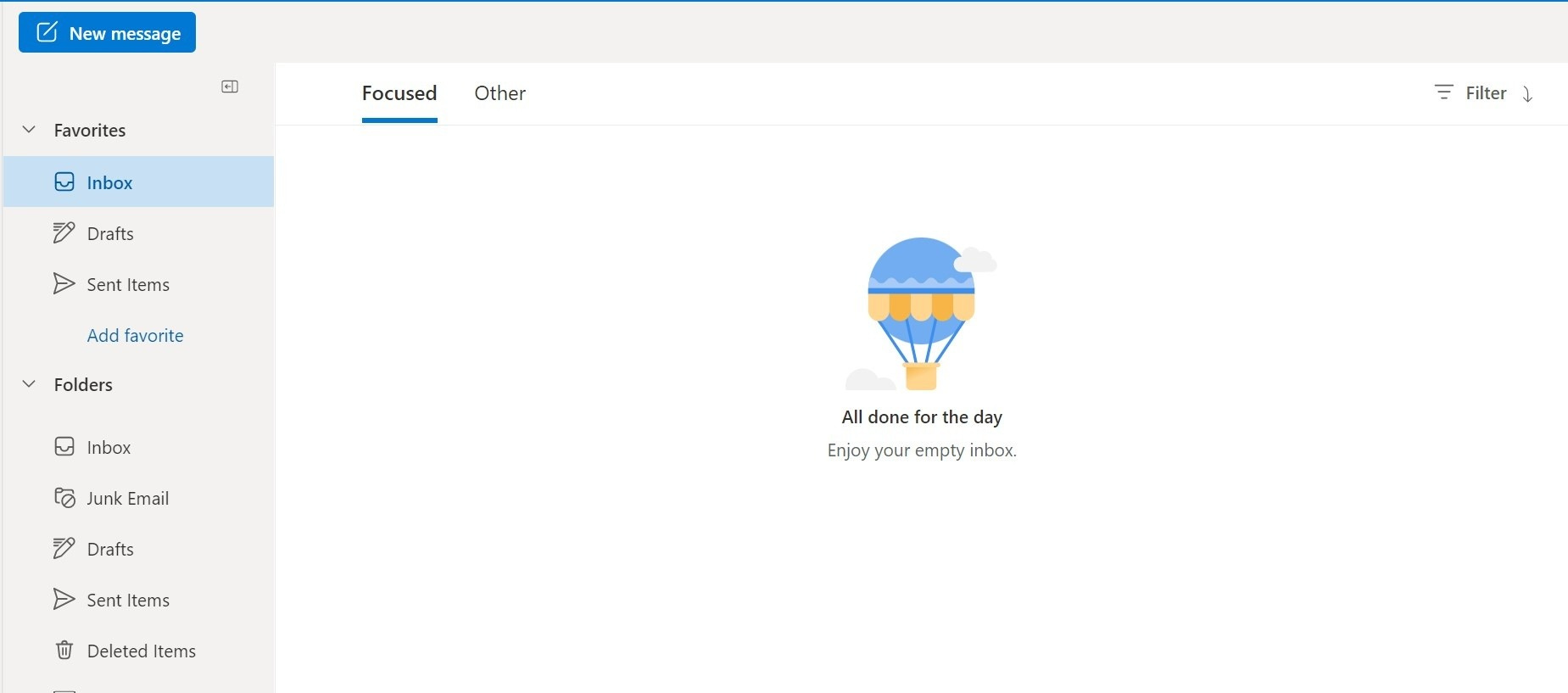
// 2029. The interior of a local coffee shop in Milton, Massachusetts (a town a half hour south of Boston and well outside of the MIT/Harvard University Zone)
Two old friends sit down for a cup of Dunkin on Saturday morning, the autumn wind rattling the window. They both look angrily at their coffee.
“Riley! You complained last year about having too many emails. Well guess what - they fixed it!”
Riley stares sullenly at their coffee. “After that landslide of Agents flooded my email, I was missing important stuff. The note from my aunt about her church fundraiser. Bucky from school asking to catch up. Lois reaching out because things were getting too hard for them between work and family stuff. I missed the invite for Skylar’s funeral! I don’t know if I’ll ever be able to forgive myself about that one.
“So yeah, I said yes to that pulsing button. ‘Help me manage my emails,’ it said. And it was great, for a while. But then…” Riley sniffles and looks into the middle-distance.
Casey nods solemnly and takes a sip. “I had the same thing happen to me. I missed an old high school friend’s note about their cancer. So I said yes to the Agent. And then it got easier and easier to just let it handle my email. Wrote them like me. Made the same dumb jokes. Referenced the Pats’ current O-line sucking just like I would. And then I started not looking at my email. First it was only once a day, then every other day, then once a week…”
Riley brings their focus, tightly gripping their coffee mug. “My Agent was responding to every email in minutes. When I’d check my email, the inbox was empty. I’d get a weekly summary of what was happening, but even that I started to ignore.”
“Email flying around faster than I could read or track it. Plans got made for me with friends and just appeared on my calendar. Whole conversations with people’s agents that I don’t know about. I don’t know if the agent or my friend made the joke about the fumble last Pats game. Casey, did you make that joke?”
Casey’s face becomes tight. “I don’t know. It’s a good joke. I hope I did. I can’t tell what I’ve thought versus what the agents think anymore.”
© 2026 The FLUX Collective.
All rights reserved. Questions? Contact flux-collective@googlegroups.com.