

Episode 219 — January 22nd, 2026 — Available at read.fluxcollective.org/p/219
Contributors to this issue: Neel Mehta, MK, Boris Smus, Ben Mathes, Erika Rice Scherpelz, Justin Quimby, Robinson Eaton
Additional insights from: Ade Oshineye, Anthea Roberts, Dart Lindsley, Jasen Robillard, Lisie Lillianfeld, Spencer Pitman, Stefano Mazzocchi, Wesley Beary, and the rest of the FLUX Collective
We’re a ragtag band of systems thinkers who have been dedicating our early mornings to finding new lenses to help you make sense of the complex world we live in. This newsletter is a collection of patterns we’ve noticed in recent weeks.
“Few people know how much you have to know in order to know how little you know.”
— Walter Ong
🏓🔁 The system always kicks back
John Gall had it right: “the system always kicks back.” And even when you “fix” something, you just move the failure. Gall again: “New systems create new problems.” The system preserves itself first. Your outcomes come second. Let’s see how this looks in context.
Demonstration vs integration
A flashy AI demo drops. Hype spikes. “This changes everything.” It doesn’t. The prototype exists in a vacuum, a controlled environment where all variables bend to its logic. But your product must plug into a big, entrenched system. The demo is fiction. The incumbent is a complex adaptive system. It self-defends.
The demonstration is frictionless by design. Integration is friction itself.
Disruption vs equilibrium
This new product is exactly what your users have been asking for! They will adopt it in droves. They don’t. Their lifestyle is held together by constraints, incentives, and politics—invisible architecture that maintains its shape. When we want change, this is a challenge, but for the most part, this stability is a good thing.
Resistance is not a bug. Resistance is the default.
Totalizing vs incremental
Le Corbusier’s urban designs were top-down, grand designs that overfit the model and underfit reality. The track record for such centralized plans is blunt: they don’t work. Gall’s law reminds us that working complexity evolves from working simplicity. From-scratch complexity fails. The all-in-one savior prototype dies because it doesn’t negotiate with the many stakeholders or adapt to the many edge cases. Doing so surrenders too much of what made the demo work.
Kill the revolutionary pitch. Run in parallel, not head-on.
Imposed vs emergent
That idea was pretty good, but you didn’t get buy-in. No one wanted to be the one to implement someone else’s idea. Instead, do the work. Be involved. Ship a small, contained system that actually works. Own one function. Let it build its own coherence. Let results—not rhetoric—displace the old machinery. This is real creative destruction: local, cumulative, irreversible. It demands humility. It rejects the founder’s fantasy of total transformation on day one.
Strategy begins where personal ambition ends.
Again and again, we see movement toward change trapped by the current dynamics of the system. This does not mean that change isn’t possible, but it requires going beyond the surface. Remember, the system always kicks back.
🛣️🚩 Signposts
Clues that point to where our changing world might lead us.
🚏🇳🇬 Local solar power is booming in Nigeria, replacing diesel generators
Nigeria’s electric grid is infamously overburdened: 38% of the country has little or no access to power, more than any other country on Earth. Most rural towns have to rely on noisy, polluting, and expensive gas or diesel generators. But solar power is flooding into Nigeria and rapidly displacing old tech: Nigeria imported 1,721 megawatts of solar panels in the first half of last year, up from 500 MW in 2021, enough to meet 5% of the country’s total power demand. The resulting boom in local, off-grid solar generation has greatly improved the quality of life in Nigerian villages by slashing living costs, reducing pollution, and extending business hours. Financing has come from local investments plus the World Bank’s $750 million project to bring electricity to sub-Saharan Africa, a region where “more than 80% of the world’s people without access to electricity live.”

🚏🎿 Ski visits to Vail Resorts are down 20% this season due to low snowfall
Vail Resorts, a company that runs dozens of ski resorts across North America, reported that skier visits are down 20% this season. The major driver was “one of the worst early-season snowfalls in the western U.S. in over 30 years”: Colorado’s snowpack is more than 50% smaller than usual, and snowfall in the Rockies is down 60% compared to the historical average.
🚏📙 An AI conference allegedly featured 100+ papers with hallucinated citations
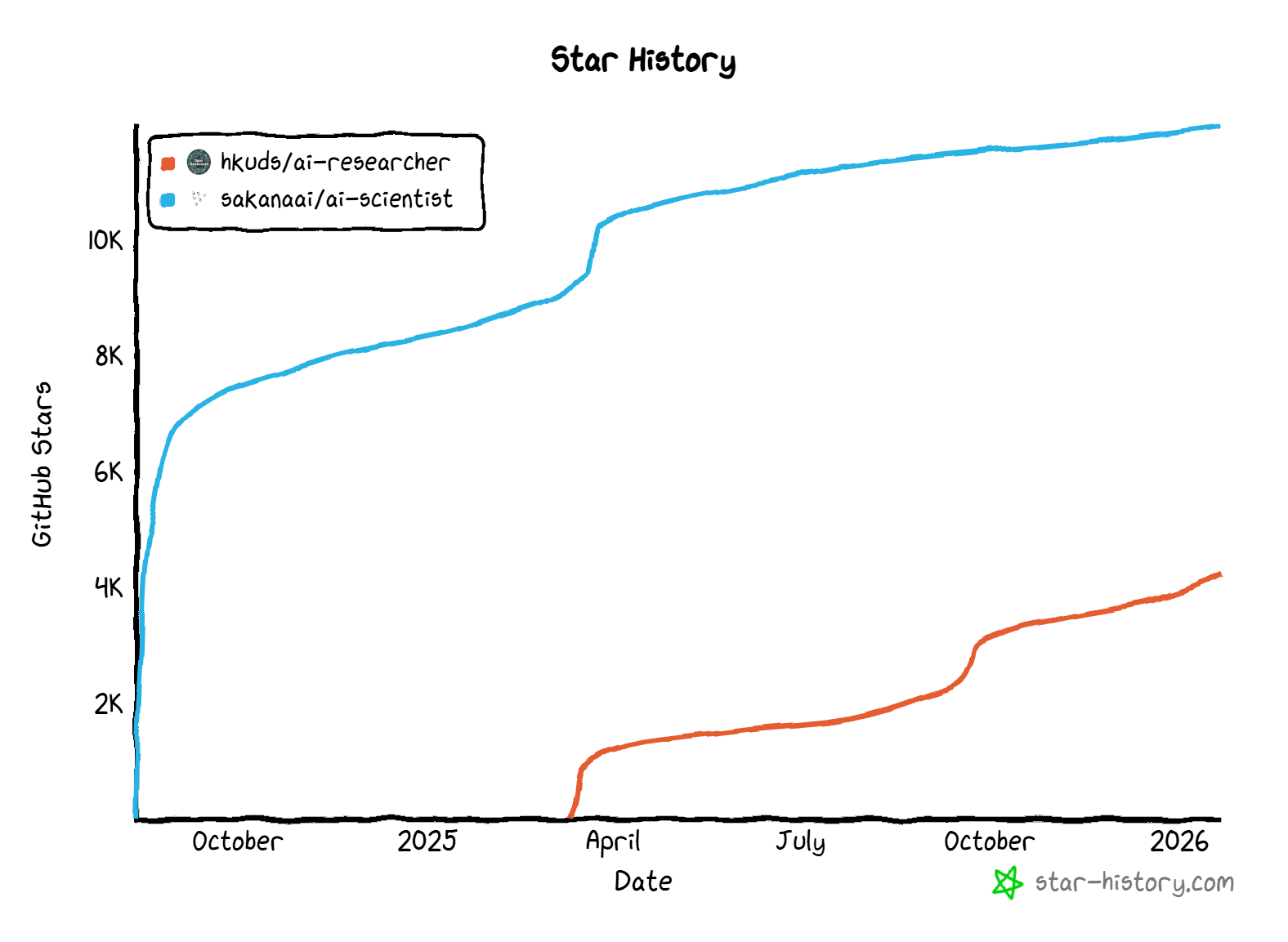
GPTZero, which bills itself as an “AI writing detector,” analyzed over 4800 papers accepted by NeurIPS, a prestigious AI conference, and found that over 100 of them included “hallucinated” citations, a telltale sign of a partially or wholly AI-generated paper. Some of these citations name nonsensical authors (“John Doe and Jane Smith” or literally “Firstname Lastname and Others”); others use titles or paper IDs that don’t match anything in the arXiv database. Perhaps unsurprisingly, open-source projects for writing research papers with AI have seen their popularity skyrocket in the last year; the jumps in the graph below around April and September 2025, suspiciously, “correspond to the paper submission deadlines” for NeurIPS and another major AI conference.
🚏🤑 Finance bros are quitting their day jobs to trade on prediction markets full-time
Prediction markets like Kalshi and Polymarket are now attracting professional, full-time traders who routinely drop tens of thousands of dollars on bets ranging from “who will be Time’s person of the year” to “how many times will a sports announcer utter their catchphrase.” Meanwhile, billion-dollar hedge funds are joining as market makers, providing liquidity for retail traders (i.e., posting ‘buy’ and ‘sell’ orders that individual users can trade against). It’s an analogue of the real stock market (and the crypto/NFT market, which also drew full-time traders and market makers). Prediction markets’ pro traders report that it’s an exciting job, but the risk of losing to insider trading looms large, and they say the markets aren’t doing much to stop it.
📖⏳ Worth your time
Some especially insightful pieces we’ve read, watched, and listened to recently.
Loss of an Ideal (Mandy Brown) — Observes that “burnout” has taken on a quite different and broader meaning than its original connotation: the exhaustion and mourning that comes with having invested oneself into a failed political project—the “loss of an ideal.” The term’s semantic shift to its modern definition (focused on the stress and depletion that comes from ambition) follows a common pattern in philosophy: “from a symptom experienced by people struggling to change society to one experienced by people trying too hard to succeed within it.”
The Microstructure of Wealth Transfer in Prediction Markets (Jonathan Becker) — Analyzes trading data from Kalshi to argue that prediction markets aren’t true ‘efficient markets’ due to a few key biases or asymmetries. The “longshot bias” (where “bettors overpay for low-probability outcomes”) leads to rare events being overpriced, and the “optimism tax” leads to “yes” outcomes being overpriced. Due to these factors, there’s a general wealth transfer from gamblers to the professional firms who now bet against them, especially in fields that attract emotional or uninformed bettors who rely more on narratives than statistics, like media, entertainment, or world events.
Why Aren’t There More Québecs? (Conor Quimby / YouTube) — Examines why there are so few “large regions of settler nations with a distinct, non-indigenous… culture,” like Quebec in Canada. There were several candidates, like the Germans in South Brazil, Finns in northern Michigan, and Scots in Nova Scotia, but they either were too small or economically irrelevant to resist assimilation or lacked (at least tacit) support from the national government. Generally, Quebec analogues need to have enough ‘gravity’ that immigrants to the region should assimilate into its culture as opposed to the national culture.
The Meditation Start-Up That’s Selling Bliss on Demand (The Atlantic) — Buddhist “jhanas” are altered states of consciousness produced from periods of strong concentration (i.e., focused meditation) and are growing in popularity among tech entrepreneurs. One startup is trying to extract the bliss, optimize it, and productize it in a gadget for the mass market, but whether biofeedback and AI can help bring novices to these jhanas remains to be seen.
🔮📬 Postcard from the future
A ‘what if’ piece of speculative fiction about a possible future that could result from the systemic forces changing our world.
// What Happens in the Datacenters?
// NEVADA DESERT - DATA CENTER CARCASS - AUGUST 2045
Subject: GRID TAP VETOED: Day 4, Lovelock Array. We are still dry.
From: Dusty_Rhoades (Logistics Lead, Temporary) To: Council_of_Cacti, The_Decommissioners
Team—
It’s clear the Aluminum Ovens we occupy are not cooling. The heat inside these vast, hollowed server barns is oppressive, a static reminder of the GPU-Fire that once ran here—the massive thermal load that was first for bitcoin mining and then training what became a third-tier model before the lab shut down. It left behind these impressive, empty shells we moved to after our last empty shells, from Oakland’s industrial revolution, got converted to condos. The power source meant to feed this beast—the unfinished nuclear plant in the other valley—is still shelved some 20 years later. First by the protest line outside town, now stuck in committees for years.
The city manager, Ms. Chen, needs a single name on the infrastructure permits for power, water, and sewer. She won’t talk to our “rotating circle.” Our current patchwork solar-trailer setup is a joke, and the six diesel-fed porta-potties are a short-term lie. This isn’t the invisible sprawl of Oakland’s abandoned warehouses anymore; here in Lovelock, they see us as a problem and a wrinkle to be ironed out.
Our leadership deadlock is paralyzing us. The Decentralists argue that a signature grants the city a Master Key to our future operations, a move back toward Autocratic Hierarchy. The Pragmatists say I should sign since I filed the initial lease. The Mythics insist on the “Oracle of the Dust” signing.
We have 72 hours (Confidence 85%) before we face eviction by the county health department. We need to agree on a leader or face the consequences of principled thirst.
Subject: RE: GRID TAP VETOED: Day 4, Lovelock Array. We are still dry.
From: Council_of_Cacti To: Dusty_Rhoades
Dusty, survival is not the sole metric. The purpose of moving here in 2045 was to adopt a governance model. We didn’t flee the comfortable anarchy of the old city warehouses just to mimic a Nevada Homeowner’s Association.
The Infrastructure Working Group’s plan for Energy Sovereignty is superior. They propose a pyrolysis unit: waste equals power. We can convert the residual server casings and plastics left by the previous tenants into heat, boiling our sewage for a micro-turbine. This cuts out Ms. Chen entirely. The previous operator’s failure proves the risk of relying on a single, massive Utility Interface that blocks the nuclear plant.
The inherent tension: We trade immediate access to cold, clean water for total operational autonomy. A single leader signing the permits gives the City of Lovelock veto power over our community’s core activities. We hold the Emergency Decision Vortex at 18:00. Do not argue for Monarchical Authority; argue for a multi-party signature system that limits the city’s power.
Subject: RE: RE: GRID TAP VETOED: Day 4, Lovelock Array. We are still dry.
From: Dusty_Rhoades (Logistics Lead, Temporary) To: Council_of_Cacti, The_Decommissioners
That pyrolysis plan uses the highly flammable insulation foam surrounding us for fuel. It’s a design for an Extravagant Disaster. We are in a highly specialized, abandoned structure; we can’t treat it like a desert fort.
I proposed a rotating, three-person, non-voting signature panel. Ms. Chen called it “A Recipe for Paralysis.” She isn’t interested in our philosophy.
And not to be all “we live in a society!!!111!!” to the former founder of the now-defunct Holacracy faction, but Ms Chen can call in the police on us. We may have the white papers, but the load-bearing good part of governance, the monopoly on violence, is something they have.
I am signing the water and sewer permits tomorrow at 10:00. The debate over who is the biggest Corporate_Shill can happen once the crisis is over. I take the hit. We’re thirsty. Get the water online.
© 2026 The FLUX Collective. All rights reserved. Questions? Contact flux-collective@googlegroups.com.
"Remember, the system always kicks back."
Having rewatched 11.22.63 recently, it reminded of "Every Time The Past Fights Back"